


Blog
How to Build Self-Confidence at Work and in Professional Life

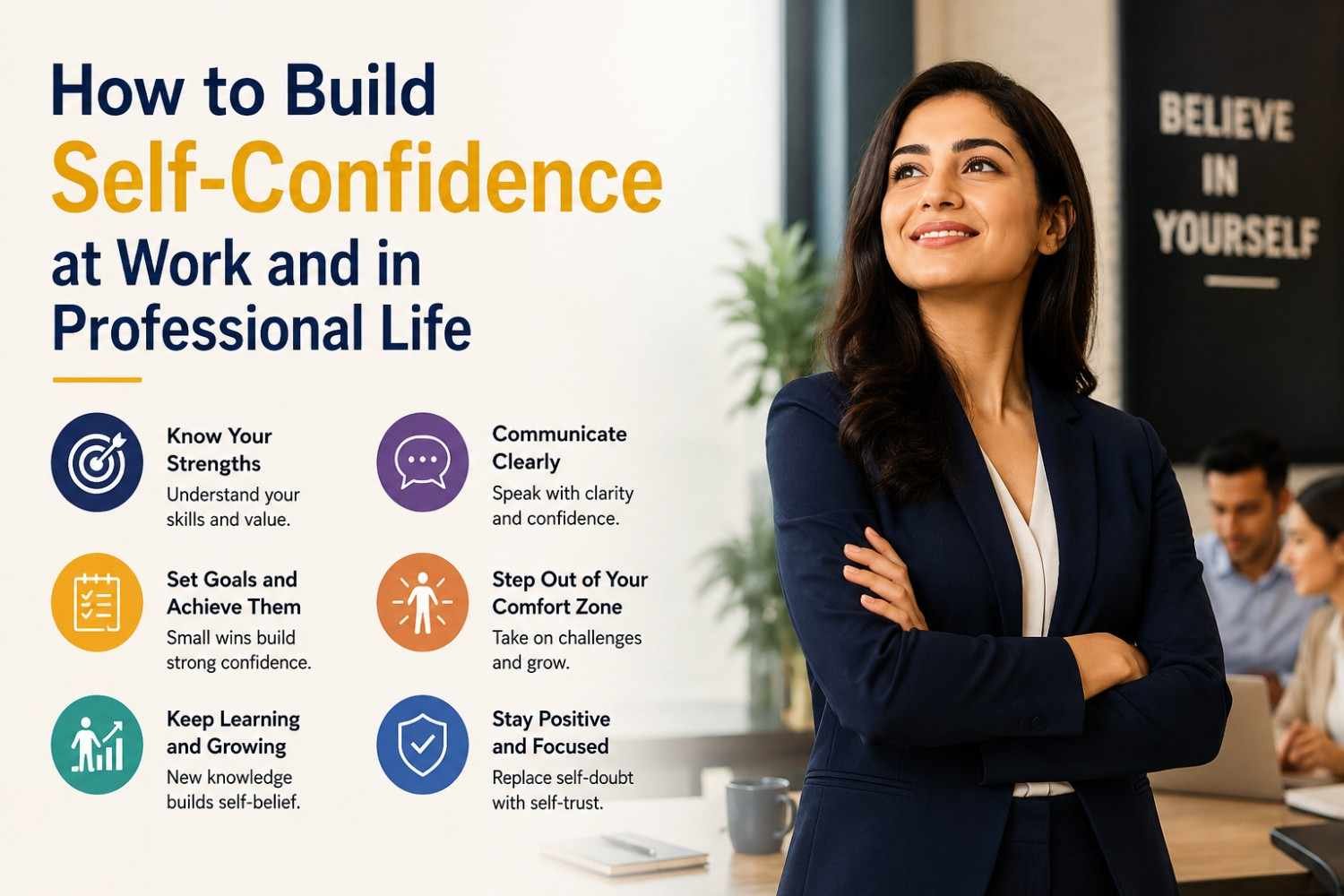
Self-confidence is among the most important qualities that a person can acquire during their professional career. It affects how you interact, make decisions, deal with challenges, and explore opportunities. If you’re a young professional or a professional looking for professional advancement or a business owner in charge of the team, confidence could contribute to your achievement.
A lot of people struggle with self-doubt or fear of failing, or fear of expressing their thoughts. The positive side is that confidence isn’t something you can’t or don’t have. It’s an ability that can be cultivated through training and the proper attitude. If you’re wondering how to increase your self-confidence in the workplace or in your professional life, this guide will assist you in taking practical steps towards becoming more confident and productive.
Why Self-Confidence Matters in Professional Life
Confidence kind of changes how you deal with colleagues, managers, clients, and business partners, in a more or less direct way. People who have confidence are usually a bit more ready to step up, accept responsibilities, and throw in ideas during conversations.
If you are confident in your abilities, you’ll be better equipped to tackle challenges and adapt when circumstances change around you. A confident attitude also makes for a pleasing first impression, which makes it easier to establish professional relationships and progress in your professional career.
Understand Your Strengths
One of the more effective ways to learn how to build up your confidence is by noticing your strengths and achievements, not just passing over them. A lot of people end up focusing so heavily on their weaknesses that they kind of lose track of the skills and little wins they already have, like it’s nothing at all.
Take a few minutes to list:
- Your professional skills
- Recent achievements
- Positive feedback from colleagues or managers
- Challenges you have successfully overcome
Reviewing these accomplishments regularly can remind you of your capabilities and help boost your confidence during difficult situations.
Set Realistic Goals
Confidence grows when you achieve goals. Instead of focusing only on large career objectives, break them into smaller and manageable milestones.
For example, you can:
- Speak up once in every team meeting
- Improve your presentation skills
- Learn a new professional tool
- Take responsibility for a project
Each achievement creates momentum and reinforces your belief in yourself.
Improve Your Communication Skills
Communication and confidence go hand in hand. The ability to express your thoughts clearly can make a significant difference in professional environments.
Focus on:
- Speaking clearly and confidently
- Maintaining eye contact
- Listening actively
- Asking questions when needed
- Participating in discussions
Many professionals choose Spoken English classes in Delhi NCR and Online personality development course in JanakPuri to improve communication skills and become more confident during workplace interactions.
Developing strong communication skills often requires guidance and consistent practice. Organizations like ExploreU help individuals improve their communication abilities and become more confident in professional settings.
Stop Comparing Yourself to Others
One of the biggest obstacles to confidence is constant comparison. Every person has a unique journey, different experiences, and individual strengths.
Instead of comparing yourself with colleagues or competitors:
- Focus on your personal growth
- Measure your progress over time
- Celebrate small achievements
- Learn from others without feeling inferior
When you focus on your own development, confidence grows naturally.
How to Overcome Self-Doubt and Build Confidence
Learning to overcome doubt as well as build self-confidence is crucial to long-term success.
Self-doubt is often triggered by anxiety about failure and criticism or fear of being unpopular. Although these emotions may be natural, they shouldn’t hinder you from taking your next step.
To overcome self-doubt:
- Challenge negative thoughts
- Focus on facts rather than assumptions
- Remember past achievements
- Learn from mistakes instead of fearing them
Every successful professional has faced setbacks. The difference is that they use those experiences as learning opportunities.
Develop a Professional Presence
The way you present yourself can directly affect how confident you feel.
Simple habits can make a big difference:
- Maintain good posture
- Dress professionally
- Stay organized
- Prepare before meetings
- Manage your time effectively
When you feel prepared and professional, your confidence naturally increases.
Keep Learning and Growing
Continuous learning is one of the best ways to strengthen confidence. The more knowledge and skills you develop, the more capable you feel in professional situations.
Consider:
- Attending workshops
- Learning industry-specific skills
- Reading professional development books
- Seeking mentorship
- Joining a self confidence program
The structured learning programs can help individuals feel a little more confident, and they also improve their professional performance overall. ExploreU is a great option. The training that is focused on development is designed to help participants develop their communication skills, improve their capabilities in leadership, and increase their confidence in themselves. This isn’t just about education, but more of a practical improvement for the real-world work environment.
How to Build Self-Confidence in Social Situations
A lot of professionals get a bit intimidated at networking events, team talks, and even client meetings. Figuring out how to grow self-confidence in these social situations can help you feel more at ease, you know, in those interactions.
Some practical strategies include:
- Preparing conversation topics in advance
- Introducing yourself confidently
- Asking thoughtful questions
- Practicing active listening
- Participating in networking opportunities
The more you engage with people, the more natural and comfortable social interactions become.
Seek Constructive Feedback
Feedback is an important part of professional growth. Instead of viewing feedback as criticism, see it as an opportunity to improve.
Ask trusted colleagues, mentors, or managers for feedback regarding:
- Communication skills
- Leadership potential
- Workplace performance
- Areas for improvement
Constructive feedback helps you identify strengths while giving you a clear direction for personal development.
Take Action Despite Fear
One of the biggest misconceptions about confidence is that you need to feel confident before taking action.
In reality, confidence is built through action.
Start by:
- Sharing your ideas during meetings
- Volunteering for new responsibilities
- Taking on leadership opportunities
- Speaking up when you have valuable input
Each successful experience strengthens your confidence and prepares you for future challenges.
Professional Guidance Can Accelerate Growth
Sometimes, having a professional’s help helps make the process of building confidence a bit easier, more achievable, and also more efficient. Incorporating confidence-building classes in Delhi NCR can assist people in developing practical skills, improving the ability to communicate, and being able to face self-doubt- not only in theory, but also in actual life.
Through structured sessions and an individual training program, ExploreU supports individuals as they develop confidence, boost workplace performance, and work towards their professional goals.
Conclusion
Learning how to build self-confidence at work and in professional life is kinda an ongoing process, you know. Confidence is developed through steady effort, self-awareness, careful learning, and real practical experience, over time.
By grasping how to grow self-confidence, get better at communication skills, beat self-doubt, set goals that actually make sense, and still move forward even when fear shows up, you can end up with confidence that lasts, and that supports both personal wins and career wins. With commitment, real practice, and the proper coaching or mentoring from groups like ExploreU, anyone can build the kind of assurance they need to do well in today’s professional environment.