

Blog
How to Give a Self Introduction for Interview: Tips, Structure & Examples

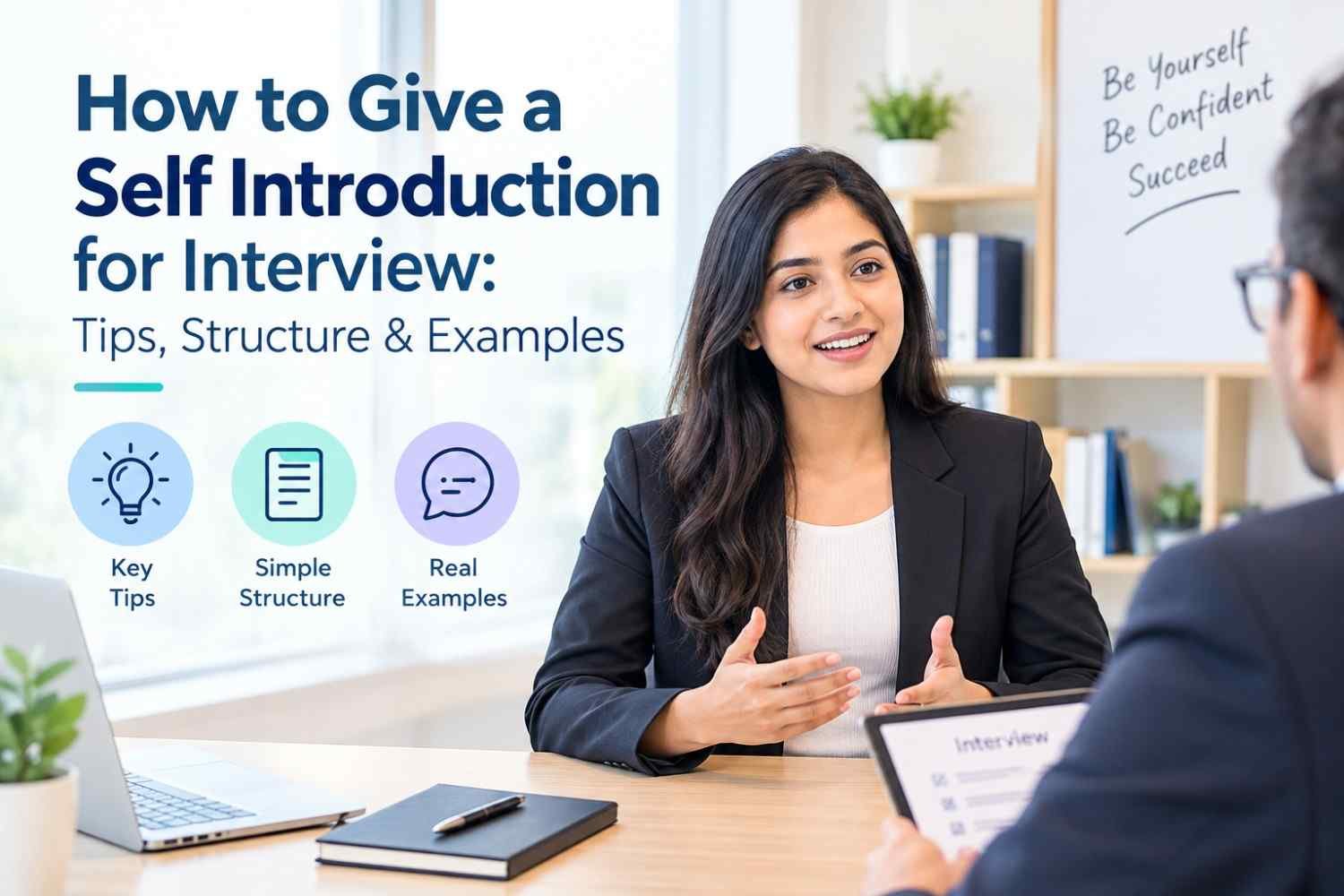
A confident introduction can shape the first few minutes of a job interview. When an interviewer says, “Tell me about yourself,” they aren’t simply asking you to repeat everything on your resume. They want to understand how clearly you communicate, how professionally you present yourself, and which experiences are relevant to the position. Learning how to deliver a strong self introduction for interview situations can therefore help you begin the conversation with greater confidence.
Whether you are a fresher attending your first interview or an experienced professional looking for a better opportunity, your introduction should be clear, relevant, and natural. With the right structure and preparation, you can explain who you are without sounding rehearsed.
Why Is Self Introduction Important in an Interview?
Your introduction is often one of the first opportunities to create a professional impression. A well-prepared self introduction for interview can help you communicate your educational background, professional experience, strengths, and career goals in a logical manner.
It also helps to provide the interviewer with an idea of your communication skills at the very beginning. Avoid impressing the interviewer by using complex terms. You may have a greater impact on him/her when you speak confidently and with clarity.
What Should You Include in Your Self Introduction?
A good introduction does not need to be lengthy. Ideally, organise your answer into a few important sections.
1. Start With a Polite Greeting
Begin with a simple greeting and thank the interviewer for the opportunity. Maintain a pleasant tone and make comfortable eye contact.
For example:
“Good morning. Thank you for giving me the opportunity to introduce myself.”
This creates a professional beginning without unnecessary details.
2. Mention Your Name and Background
Introduce yourself briefly and explain your educational or professional background. Freshers can mention their degree, specialisation, institution, or relevant academic experience. Professionals can focus more on their current role and years of experience.
This part of your self introduction for interview should be directly connected to the position you are applying for.
3. Highlight Relevant Skills and Experience
After introducing your background, mention two or three skills that are useful for the role. If you have professional experience, briefly explain your responsibilities or an achievement that demonstrates your capabilities.
Avoid listing every skill from your resume. Instead, choose qualities that support your suitability for the particular job.
4. Explain Your Career Goal
Conclude your introduction by making brief mention of what you would like to achieve in your next endeavor. Your aim must be logical in connection with the job itself.
Self Introduction for Interview for Freshers
For students and recent graduates, the introduction can feel particularly challenging because they may not have much professional experience. However, a lack of work experience does not mean you have nothing valuable to discuss.
A self introduction for interview for freshers can include your education, projects, internships, certifications, technical or soft skills, extracurricular activities, and career interests.
For instance, a graduate applying for a job in marketing can talk about a market research assignment done at college level, his interest in digital marketing, and good communication skills. This is meant to demonstrate potential rather than apologizing for lack of experience.
How to Introduce Yourself in an Interview
Many candidates wonder how to introduce yourself in an interview without sounding overly rehearsed. The key is preparation rather than memorisation.
List down some of the important points that you wish to communicate, and try to speak out these points in your own words. If you record yourself speaking a couple of times, you can find whether you are speaking at a fast pace or not.
Keep your introduction focused on information that helps the interviewer understand your professional profile. A confident voice, appropriate body language, and a calm pace can make your answer more effective.
Interview Introduction Examples
Here is a simple structure you can adapt:
“Good morning. My name is [Name]. I recently completed my [Degree] from [Institution]. During my studies, I developed an interest in [Field] and worked on [Project/Activity], which helped me improve my [Relevant Skill]. I am particularly interested in this opportunity because it matches my skills and career goals. I am looking forward to learning, contributing to the organisation, and developing professionally.”
These interview introduction examples should be treated as a framework rather than something to memorise word for word. Your introduction will be stronger when it reflects your actual experience.
How to Answer “Tell Me About Yourself in an Interview”
“Tell me about yourself in an interview” is one of the most common opening questions. Instead of discussing personal information in detail, use the question as an opportunity to present your professional story.
One can adopt the following approach: begin with where you stand right now in terms of background, move to experience, strengths, and finally to the future, in terms of your career goals. It helps you keep your response to the question short and relevant.
Job Interview Introduction Tips to Remember
A few practical job interview introduction tips can help you feel more prepared:
- Keep your introduction concise and relevant.
- Speak naturally instead of memorising every sentence.
- Maintain comfortable eye contact.
- Avoid discussing unrelated personal information.
- Highlight skills that match the position.
- Practise your answer before the interview.
- Keep your tone confident but conversational.
- Avoid speaking too quickly when you feel nervous.
Build Confidence Through Practice
Confidence is achieved through consistent practice. If you often struggle with communication, interviews, or presenting your thoughts, training might be a good option. ExploreU emphasizes communication and personality development skills, which may be helpful for practising professional communication and presentation.
Candidates looking for more guidance can consider Job interview coaching in Delhi NCR and get themselves enrolled in some sessions where they can practice mock interviews. Likewise, Professional development training in Delhi NCR can prove helpful in developing their communication, presentation, and job skills.
Final Thoughts
An effective self-introduction before an interview doesn’t have to entail great language skills or a lengthy introduction. It just takes clarity, relevancy, confidence, and preparation. You need to know your background, know what skills are relevant for the job, and practice introducing yourself.
Whether you are a fresher or an experienced professional, remember that your introduction is the beginning of a conversation. Prepare well, stay genuine, listen carefully to the interviewer, and let your personality come through naturally.