

Blog
Communication Skills vs Soft Skills: Which Is More Important?

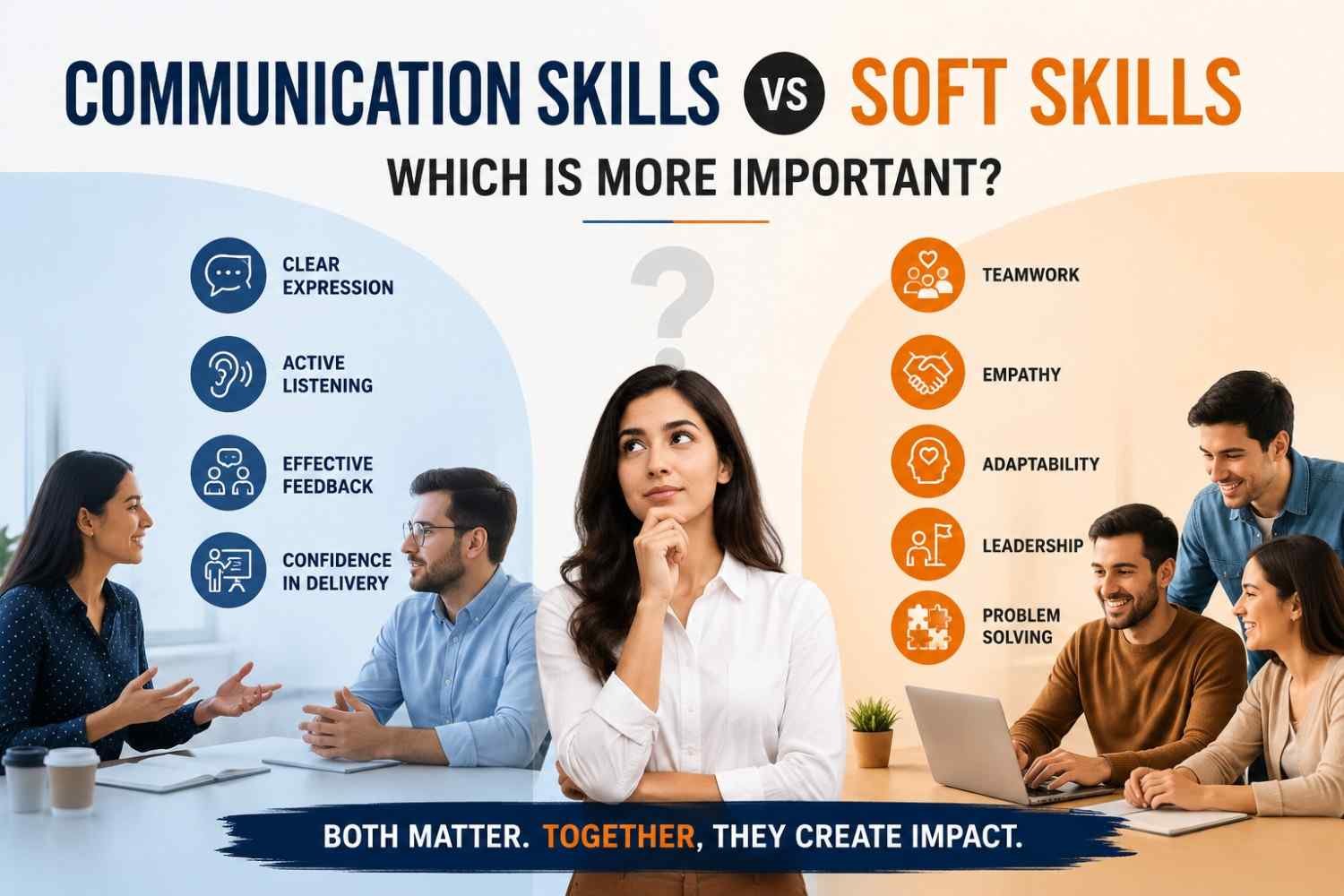
In today’s competitive world, employers and organizations value more than just technical expertise. They look for professionals who can communicate effectively, work well with others, and adapt to changing situations. This often leads to the question: Communication Skills vs Soft Skills – which one is more important?
Although these terms are closely connected, they are not the same. Understanding the Difference between communication skills and soft skills can help students, job seekers, and professionals develop the right abilities for long-term success. In this blog, we’ll explore both concepts and explain why mastering them is essential for personal and professional growth.
What Are Communication Skills?
Communication skills refer to the ability to express ideas, thoughts, and information clearly while also understanding others. They include verbal, written, non-verbal, and listening skills that help people communicate effectively in different situations.
Some examples of Effective communication skills include:
- Active listening
- Public speaking
- Professional email writing
- Presentation skills
- Body language
- Negotiation and persuasion
Strong communication helps avoid misunderstandings, build trust, and improve teamwork, making it one of the most valuable workplace skills.
What Are Soft Skills?
Soft skills are like personal qualities, behavioral traits, that kind of shape how people interact with others , and also how they manage workplace responsibilities. Different from technical or hard skills, soft skills tend to travel across industries and job roles, sort of universally. They’re the more human side of performance, you can say.
Examples of Soft skills for career success include:
- Leadership
- Teamwork
- Emotional intelligence
- Adaptability
- Problem-solving
- Time management
- Critical thinking
- Conflict resolution
- Communication
Communication is actually one of the most important soft skills, which is why people often confuse the two.
Difference Between Communication Skills and Soft Skills
Understanding the Difference between communication skills and soft skills makes it easier to identify where you need improvement.
| Communication Skills | Soft Skills |
| Focus on exchanging information clearly. | Focus on overall personal and interpersonal abilities. |
| Include speaking, listening, writing, and presenting. | Include leadership, teamwork, adaptability, communication, and emotional intelligence. |
| Help people express ideas effectively. | Help individuals work well with others and solve problems. |
| Improve conversations and collaboration. | Improve workplace performance and professional relationships. |
| Are a part of soft skills. | Represent a broader category of behavioral skills. |
Simply put, communication skills are one essential component of the broader soft skills category.
Importance of Communication Skills
Communication skills matter more than just talking back and forth. Like, yeah, it’s not only about conversations. Whether you’re at an interview, running a meeting, or dealing with customers, solid communication helps you leave a good impression, pretty quickly too.
Benefits include:
- Building stronger workplace relationships
- Sharing ideas with confidence
- Reducing misunderstandings
- Improving teamwork
- Resolving conflicts professionally
- Increasing productivity
- Enhancing leadership abilities
Professionals with excellent communication skills often gain more confidence and are better equipped to handle workplace challenges.
Why Soft Skills Matter for Career Success
Employers are starting to realize that technical knowledge by itself isn’t really enough. So, Soft skills for career success have, kind of, turned into a key hiring criteria across industries, because the other side matters just as much: people skills and that kind of thing.
Strong soft skills help professionals:
- Adapt to changing work environments
- Collaborate effectively with teams
- Manage time efficiently
- Solve problems creatively
- Build lasting client relationships
- Handle workplace pressure
- Lead teams successfully
Developing these skills makes employees more valuable and increases their opportunities for promotions and leadership roles.
Communication and Interpersonal Skills: Why They Work Together
Many people use Communication and interpersonal skills interchangeably, but they serve different purposes.
Communication skills let you get your thoughts out, kind of clean and clear. Then interpersonal skills, those help you form that trust, show a real feeling for other people, and keep a good, positive relationship going, not just surface-level. Sometimes it’s like you don’t notice it, but that balance matters a lot.
For example, you can deliver a pretty excellent presentation by using strong communication skills, but the interpersonal side matters too, because it helps you respond to questions in a respectful manner, grasp different points of view, and collaboratively work alongside your audience.
Together, these skills create better teamwork, stronger professional relationships, and improved workplace performance.
Communication Skills vs Soft Skills: Which Is More Important?
When comparing Communication Skills vs Soft Skills, there isn’t a single winner. Both are equally important because they complement each other.
Imagine someone has top-notch technical understanding but their communication is kind of weak. So their thoughts might never be caught or appreciated, even if they are really good. At the same time, another person can talk in a smooth way, and yet if they don’t collaborate well, can’t adjust to new situations, or lack emotional awareness, it’s likely they’ll keep hitting barriers when it comes to team settings.
Communication helps you share what you know, and yet soft skills decide how well you actually deal with people, guide, and sort through tricky issues. In practice, it kind of all goes together. The best professionals usually build both, not just zoom in on one thing and ignore the rest.
If you want to boost your workplace readiness, then joining a Communication skills course in Delhi NCR can really help sharpen your speaking, presentation, and listening abilities. In the same way, professional soft skills training in Delhi NCR seems to improve leadership along with teamwork, confidence, and emotional intelligence—so it’s better for long-term career growth.
Conclusion
Understanding communication skills vs soft skills is important for anyone who wants to grow personally and professionally. Even if the difference between communication skills and soft skills sounds obvious at first, they’re both pretty valuable in today’s workplace, you know.
The importance of communication skills is really about being able to say what you mean in a clear way and also making those meaningful connections, even if it’s sometimes a bit messy. Soft skills for career success help you collaborate, guide others, and adapt when the situation shifts. If you improve effective communication skills along with solid communication and interpersonal skills, you tend to build confidence faster, strengthen the professional relationships you already have, and open up better career opportunities.
Whether you’re a student, job seeker, or experienced professional, investing in both communication and soft skills is one of the smartest steps toward lasting success.